
The Silt Ratchet
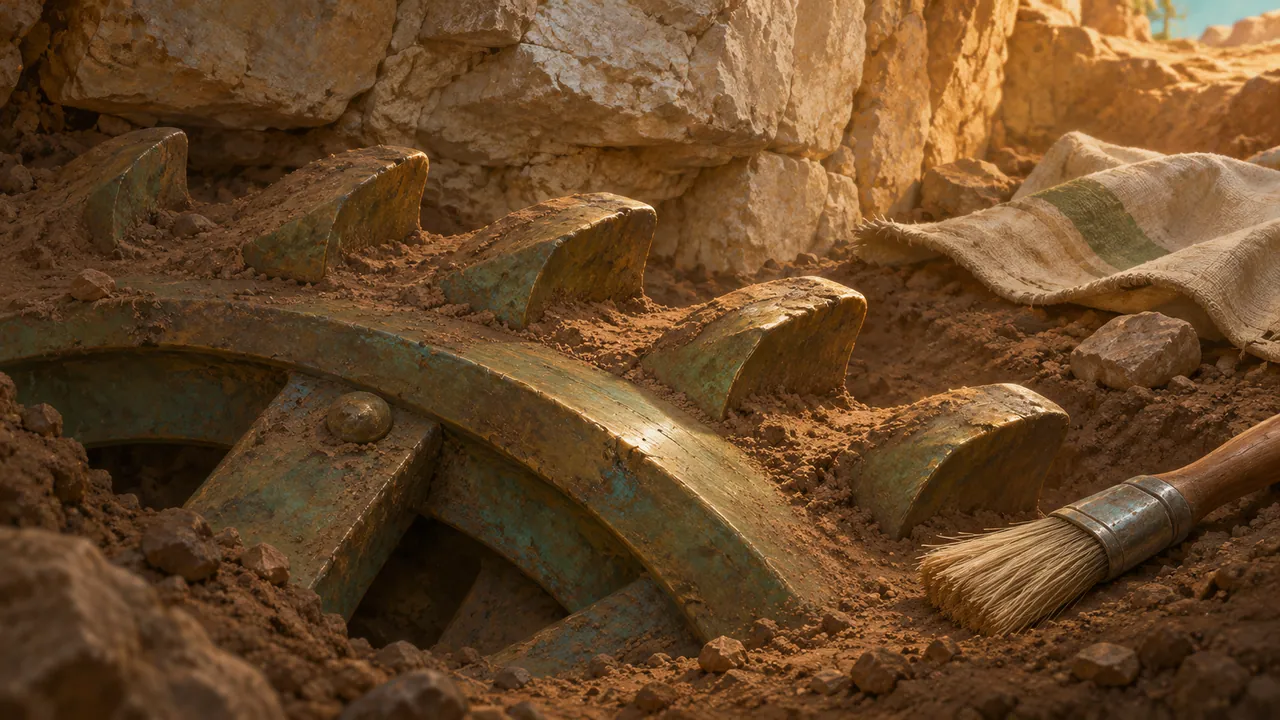
At the eastern edge of the Venn Cut, a shallow limestone channel used to take water off a raised yard. The first probe under a sill stopped against a tooth of bronze. We treat the channel as a fictional work site. The player comes in after the surrounding course has been recorded and has the area immediately around the tooth to investigate. A chalk mark beside the drain gives the position where another object might have rested. The first puzzle is to establish what kind of motion belongs to the ratchet and how much of it could take place in that space.
Clear one face at a time
Begin by lowering the brush just enough for the bristles to bend. Place its outer edge near the tooth and sweep toward the open part of the channel. The gap between the floor and the first tooth remains full at first. A heavy pass could carry away an intact strip of dark sediment next to it. We preserve that strip because water can deposit dirt on the sheltered side of a moving feature. When you uncover the face, use a pencil mark on the section drawing to locate the first clean patch. The record keeps the angle of the view. A strip of sediment can look like a shadow when seen from farther south.
Recover a range of motion
Later passes reveal a curved housing around two of the teeth. The housing has a shallow relief groove that begins level with the main contact point and stops just short of the culvert. Inspect both ends before making a guess. The endpoint limits where the gear would have sat after a complete movement. A bright spot in the relief groove may indicate where an otherwise hidden inlay reached the edge. A second way to check is to follow the distance between the polished faces. If those faces are close together, a long revolution is hard to reconcile with the marks. You can set a soft stop on the provisional drawing to make that prediction explicit.
Handle the key after the drawing
The site offers a small keyed pin whose end fits the recess along the surface of the wheel. Approach the lock after recording the pieces you can see. The control uses two stages. First bring the pin into the recess and feel for a seat. Then rotate a small distance and compare the stop with the one you marked. An incorrect angle can load dirt against the tooth. Back out and look again without losing the exposed patch. The issued pin has a blunt shoulder. It will catch dirt before it can cut marks into the bronze. A practice channel at the edge of the area teaches where that point of resistance feels different from a real mechanical stop.
What the prototype can establish
The game is in concept development. The first test area ends at a slow opening of a short sluice shutter after the lock has travelled the amount predicted by the exposed wear. An extra lighting angle is available to help people who cannot read the difference in tones. We hold texture and control response constant while testing the effect of a longer brush pass. The note A Low Brush Approach isolates that gesture. The First Exposed Teeth examines the limits of the first identifiable piece. The two studies help explain why the opening observation can remain valuable after the whole mechanism is clear.