
Seal Beneath the Tally
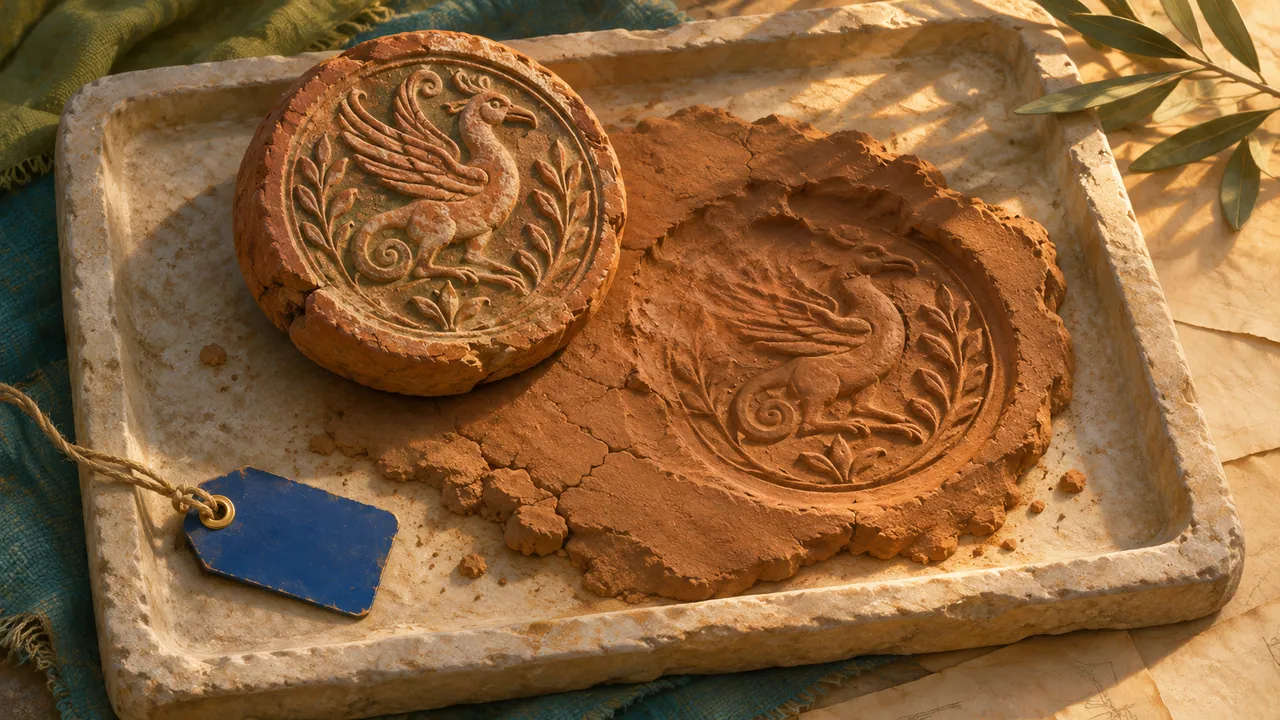
Under a low threshold in the fictional Venn Cut are three clay impressions and a small lump attached to a broken stopper. A straight line divides the likely working surface from the light-colored repair beside it. A reader can see the wide edge of the oldest impression without knowing that it was oldest. The objective in this design concept is to reconstruct enough of the pressing order to open the tally recess. The player is allowed to leave supporting details unresolved if they can explain which part of the sequence the physical evidence requires.
Learn the local order
Examine how fresh clay would have moved from a press. Near the right side of the threshold it piled up against a ridge. The ridge bends under an edge that runs straight across the stamped area from a different direction. Match that difference on a small clay board before touching the original. You can form a ridge and lay a straight edge over it in either order. In one case the two marks meet. In the other case the later press interrupts the ridge. The comparison offers a practical rule to take back to the threshold. It does not tell you which seal was used where. The player still needs to identify a section of the surviving mark where that rule applies.
Use light to make an edge visible
Carry a sight card to the northern jamb and use it to hold your preferred viewing angle. The room is narrow, so the line of daylight from the opening behaves like a moving bar along the edge of the impression. At one point it separates the slope of the clay from the mark pressed into it. If you make a drawing at that point, you can compare it against a second view with the light on the opposite side. Two marks that look continuous in the first view can separate again. The investigation encourages a player to mark the part that is confirmed and leave the rest unshaded.
Bring the order to the recess
The recess has three shallow seats. Each uses a tilted plane to guide a marker to a resting position. Place markers according to the recovered order, then test the stop at the bottom of the panel. Its movement gives you one more piece of information because it can expose the rear of the middle seat. If the seat had been changed to hold a thicker stamp, you can remove the middle marker without disturbing the other two. We propose keeping each move reversible until the order has been checked against the observed overlap. The order matters only where it changes the state of the lock.
A design study with a short threshold
The area is a single-room concept. We do not plan to test a whole museum collection with it. We want to see whether someone can recognize the difference between a press and its shadow, and whether they ask to look again before committing to a sequence. We provide the same observations at two magnifications and make a silent record of the movement. Moving the Light Along the Seal covers the problem behind that arrangement, and Locating the Trench Drawing describes the set of fixed reference points that helps a player return to the same physical spot.